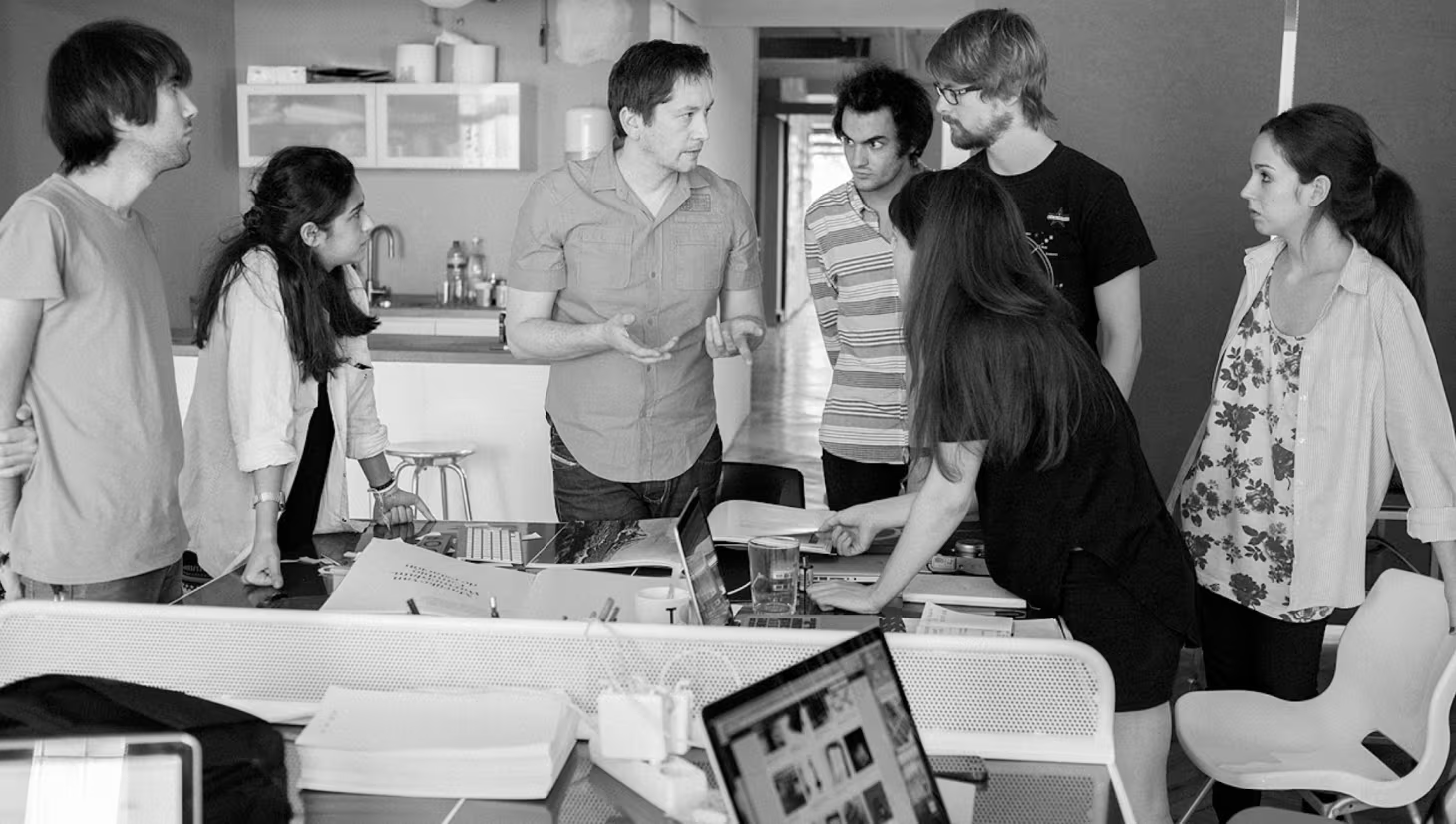
A commitment to shaping the next generation of designers begins. Pablo leads courses at IED Madrid and IE School of Communication, and later co-creates and directs the Master in Digital Product Design (mUX) at Universidad Europea.
Education becomes a strategic act, elevating design from craft to a discipline capable of shaping business, culture, and innovation.
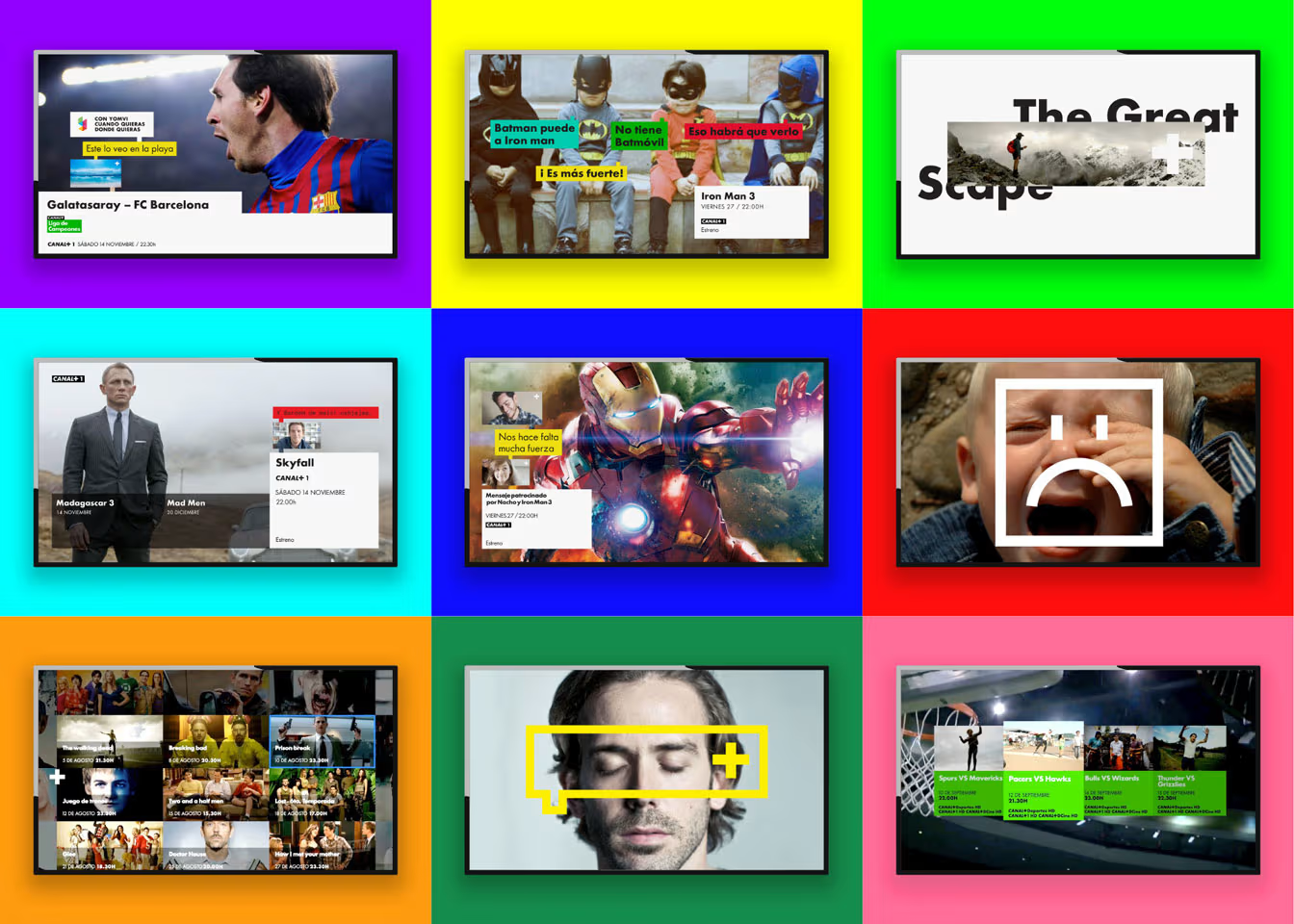
A pivotal moment in Spanish broadcasting. Erretres reimagines the Canal+ brand, one of Spain’s most emblematic media platforms. At a time when the broadcasting industry was shifting from linear television to digital ecosystems, the challenge was not only visual but structural: build a brand capable of evolving across formats, screens, and content models.
Rather than approaching the project as a cosmetic change, Pablo introduced a human-centered identity system that placed audience experiences at the core. The result was a flexible visual language and a narrative platform that supported innovation, cultural relevance, and emotional connection.
The work set a benchmark for Spanish media branding and continued to shape the identity of Movistar+ after the merger, proof of a principle central to Pablo’s philosophy: brands should be designed to last, adapt, and scale beyond immediate trends.An iconic moment where design met culture, technology, and long-term vision.
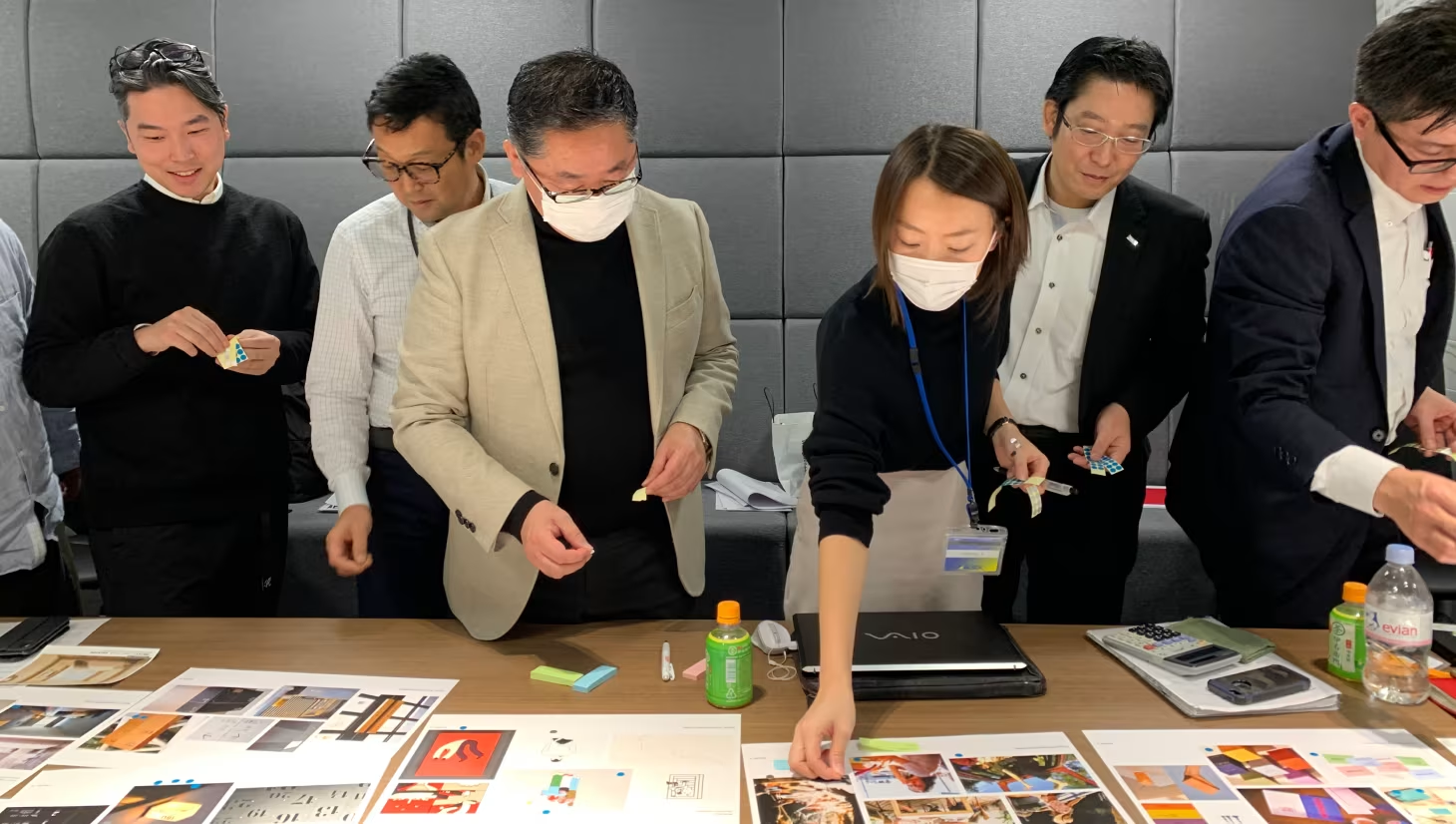
A global perspective meets cultural precision. Erretres leads the brand and digital ecosystem for EN Hotel, a new hospitality concept born in Japan. More than a visual identity, the project explored how a brand can express culture, translate heritage, and shape experience through both physical and digital touchpoints.
From naming and verbal identity to spatial cues and digital flow, the brand was built as a seamless bridge between omotenashi (Japanese hospitality) and global simplicity.
With a brand system adaptable across cities from Tokyo to Kyoto and beyond, EN Hotel became a case study in designing for cultural authenticity at scale: respectful of place, rigorous in craft, and intentionally minimalist to let context speak.
An exercise in cultural sensitivity and modern hospitality, where identity and experience coexist in balance.
Digital branding methodology

Two decades of practice distilled into a unified strategic framework, one that brings brand and product development together as a single continuous system. Instead of treating branding and digital product design as parallel but disconnected processes, this methodology aligns identity, UX, technology, and business strategy so they evolve in real time, shaping one another through a shared logic and purpose.
This approach challenges the old sequence of “brand first, product later” by treating brand as a living operating system: a strategic infrastructure that guides product decisions, culture, and communication simultaneously.
The methodology was published in Pablo’s book Digital Branding: How to Build Brands and Products for the Digital Economy. Built on the belief that brands are no longer static symbols but dynamic platforms, this milestone established a new standard for how modern companies build trust, scale experiences, and compete in digital markets.
Brand and product, not as phases, but as one integrated engine for growth and meaning.
Helping to build unicorns
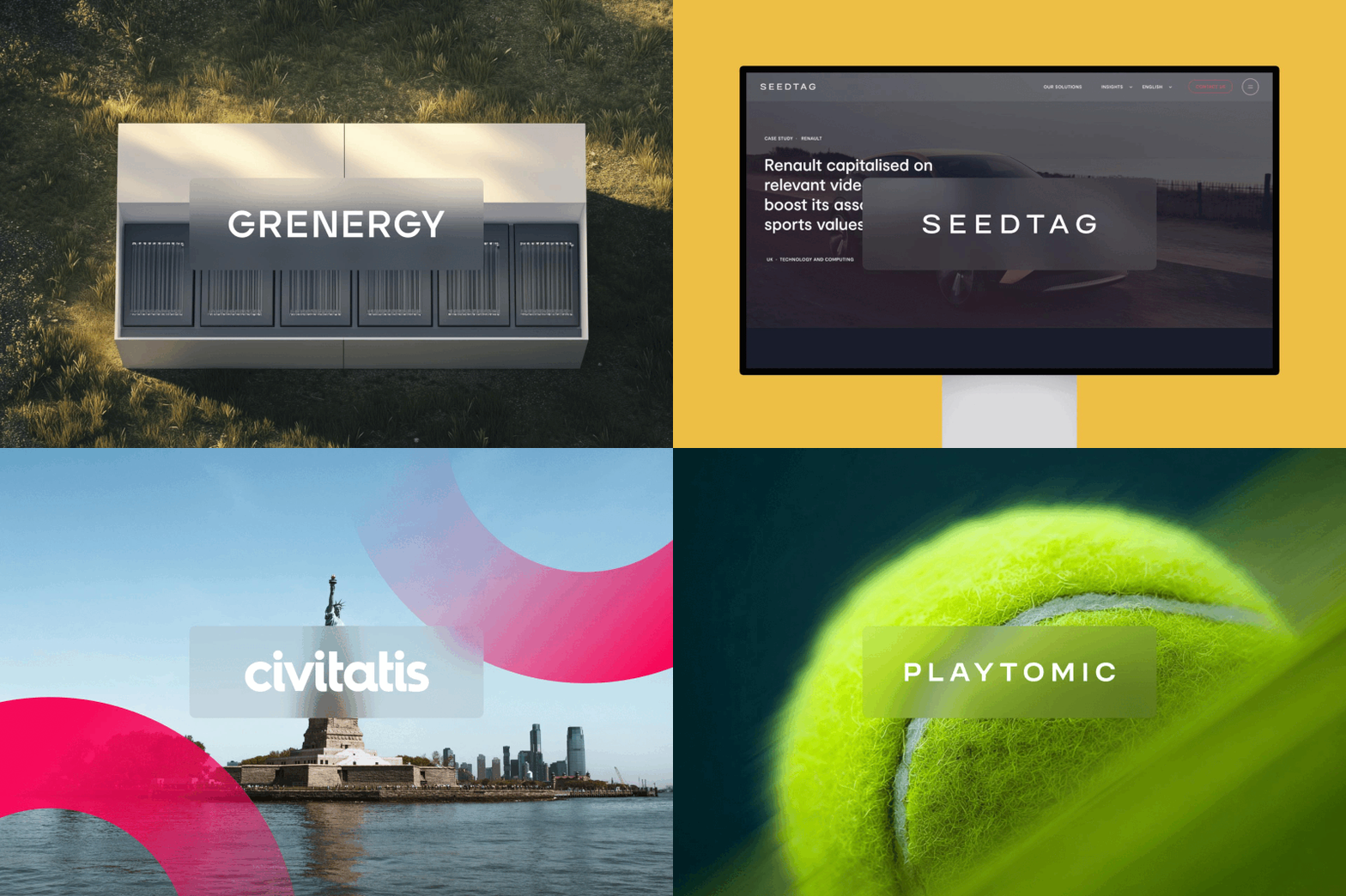
A new chapter in design as business strategy. In 2025, Pablo introduced Design4Growth, a framework built on the belief that design must do more than express identity, it must accelerate business performance. After two decades shaping brands and digital products, this evolution reframes design as a growth architecture: a system that aligns brand, culture, product, data, and technology to drive measurable results and long-term value.
Beyond aesthetics or storytelling, design becomes infrastructure: a discipline for clarity, speed, and competitive advantage in a world shaped by AI, rapid transformation, and constant change.
Created for a new era in which speed, coherence, and adaptability define success, Design4Growth positions Erretres not as a producer of deliverables, but as a partner in transformation.
The goal is not simply to make brands attractive, but to make them advantageous: resilient, scalable, and capable of sustained momentum.
Design as strategic leverage. Growth not as chance, but as consequence.